
THE TEAM

UnitelmaSapienza University of Rome is an online public university linked to Sapienza University of Rome, combining academic research, higher education and professional training. In CIRCONOMY, UnitelmaSapienza acts as project coordinator and contributes its expertise in circular economy, circular bioeconomy, sustainability transitions, stakeholder engagement, and the development of decision-support approaches for sustainability-oriented policies and practices. The team also draws on the experience of the Bioeconomy in Transition Research Group (BiT-RG), coordinated by Prof. Piergiuseppe Morone, whose work focuses on the transition towards circular and bio-based economic systems.

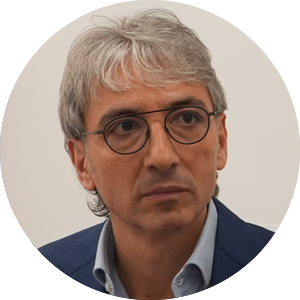
Piergiuseppe Morone

Scientific Coordinator
UNIT Team Leader

Eleonora Staffieri

Project Manager
Project Coordination Team

Angelica De Fabrizio

Researcher
Project Team Member

Teresa Turzo

Researcher
Project Team Member

The Circular Bioeconomy Research Group of the Chair of Innovation Economics of the Technische Universität Berlin works at the intersection of innovation and sustainable transition. Our research studies how standards, regulation, intellectual property, and public procurement act as strategic tools to steer innovation while advancing sustainable and competitive economic development.

Within Circonomy, our research group supports the development and deployment of a micro-level monitoring tool to assess circularity. In particular, we are responsible to test the monitoring tool at the industry level, as well as overseeing the pilot case studies at the municipality and household levels.

Luana Ladu

Leader of the Circular Bioeconomy
Research Group

Nikola Matovic

Research Associate

Luciano Proto Cassina

Research Associate

Wageningen Food & Biobased Research (WFBR), part of Wageningen University & Research, translates front-line science to applied solutions that safeguard human needs through efficient use of bioresources. We develop insights, technologies and practical innovations that help companies, governments and philanthropic organisations make well-informed, future-proof decisions. Our work addresses challenges related to food quality, sustainable production chains, renewable materials and circular solutions.

Our applied research spans the entire value chain: from developing and scaling up processing technologies and improving product formulations, to designing sustainable packaging, valorising side streams and closing material loops. By combining our expertise in food and health, process technology, biobased and circular materials, sensory research and digital tools, we create solutions with measurable impact — ranging from climate-friendly production chains to biobased alternatives to fossil-based materials. This ensures that decisions are both scientifically sound and societally credible.

In this project, WFBR is responsible for the development of the CIRCONOMY micro-level circular economy monitoring framework (WP2 lead and Task 4.3 leader).

Iris Vural Gursel

Senior Scientist

Heleen Ballemans

Researcher

The Centre for Research and Technology Hellas (CERTH) suggests one of the most important Research Centers in Greece with a main mission: The promotion of innovative research for the benefit of society. Dedicated to this purpose, CERTH lies at the forefront of basic, applied and technological research to provide solutions to society’s modern challenges. One of its five Institutes is the Institute for Bio-Economy and Agri-Technology (iBO), focusing on the scientific field of agri-technology and the broader scientific area of biosystems engineering. iBO’s research priorities include rational environmental management and sustainability assessment of bio-production activities, and the optimization of human interactions within these activities, all in the direction of adopting the principles of the circular economy. Finally, the Environmental Engineering and Sustainability (EnvES) lab is a key unit within IBO, specializing in circular bioeconomy and the green transition, addressing the interactions between environment, energy, and quality of life, and exploiting this knowledge in the design of novel processes and products serving sustainability objectives. The lab’s expertise lies in the upcycling and valorization of bio-based residues and by-products, the mapping of biomass resources, pinpointing environmental and socioeconomic benefits, the digitalization of value chains, and creating linkages by employing innovative circular thinking approaches towards decarbonization pathways and resource efficiency.

George F. Banias

Research Director (Grade A’)
Laboratory Head

Maria Batsioula

Research Associate
PhD candidate

Stamatia Skoutida

Research Associate
PhD candidate

Responsible for communication, dissemination, stakeholder engagement, and liaison with other projects and initiatives, FVA will transform technical results into accessible formats and promote co-creation and stakeholder involvement. By leveraging the European Bioeconomy Network, FVA will facilitate collaboration with external entities. FVA provides the infrastructure for digital outreach, including online engagement platforms, multimedia production, and participatory communication channels that support both stakeholder engagement and the digital version of the tools. Furthermore, FVA will develop and manage the project website as the main information hub, ensuring visibility, transparency, and open access to results for all audiences. Leveraging its expertise in communication, FVA will also ensure alignment with open science principles and encourage stakeholder inclusiveness, thereby enhancing the project’s social impact. In addition, dissemination, policy alignment, capacity building, and long-term institutional adoption will be supported through the active involvement of all partners, guaranteeing that outcomes are broadly visible, transferable, and actionable across Europe and beyond.

Valentina Vavassori

C&D Project Manager
Science Communication Expert

Louis Ferrini

New Media Creative Director

Susanna Albertini

Stakeholder Engagement Expert

Selenia Marinelli

C&D Expert

Nicholas Ferrini

New Media Designer
Student in Computer Science & AI Engineering
Cittadinanzattiva APS is an organization, founded in Italy in 1978, which promotes citizens’ activism for the protection of rights, the care of common goods, the support for people in conditions of weakness in Italy and abroad.

Our mission refers to article 118, last paragraph of the Italian Constitution, proposed by us and implemented in the constitutional reform of 2001. Article 118 recognizes the autonomous initiative of citizens, individuals and associates, for carrying out activities of common interest and, based on the principle of subsidiarity, provides for the obligation of institutions to favor active citizens.
Cittadinanzattiva, which has also been officially recognized in Italy as a consumer organization since 2000, is independent from any political affiliation, trade unions, private companies, and public institutions.
Cittadinanzattiva considers citizens a fundamental resource for democracy, who play an active role in society and should have the opportunity to participate in everyday policy making.

Tiziana Toto

National Head
of Consumer Policies

Cinzia Pollio

Consumer Policy
Project Coordinator

Mariano Votta

Responsible for EU Affairs
and Director of
Active Citizenship Network

Viridiance Insights is a spin-off company of the Technical University of Crete, established and powered by researchers from the Industrial and Digital Innovations Research Group (indigo). Viridiance aims to support industries in their green transition by enhancing the sustainability and circularity of their value chains, through innovative digital solutions for process modelling and optimisation, digital twins, and advanced sustainability and circularity performance assessment. Viridiance Insights envisions a world where industries operate with respect for the environment and society, leveraging cutting-edge technologies to achieve sustainable development.

Viridiance Insights (VIRID) leads the technical development of CIRCONOMY’s modular, cloud-native digital tool (WP2, T2.3 Leader & WP4, T4.4 Leader). Moreover, VIRID is responsible for the Replication Strategy and Roadmap of CIRCONOMY (WP5, T5.4 Leader), also contributing to Tasks 4.2, 5.1, 5.2 & 6.2.

George Arampatzis

Viridiance Insights CEO
Principal Investigator of
indigo Research Group
Full Professor at TUC

Maria Aryblia

Environmental Engineer MSc
Co-Founder
Project Manager

Vasilis Skevakis

Electrical & Computer Engineer
Senior Developer

Tonia Papadaki

Production and Management Engineer MBA
Experienced Researcher

Nikos Skarakis

Physicist MSc
Experienced Researcher
PhD Candidate at TUC
Major Development Agency Thessaloniki S.A. (MDAT S.A.) is a municipal development agency serving the municipalities of the Thessaloniki Metropolitan Area. Its mission is to support local authorities in becoming more sustainable, climate-neutral, resilient, inclusive and citizen-centred through integrated planning, technical assistance and the implementation of innovative development initiatives.

Acting as the technical and development arm of municipalities, MDAT supports the planning, maturation, procurement, implementation and management of public investment projects. The organisation coordinates the preparation of technical studies and delivers urban regeneration projects, the redevelopment of public spaces, the construction, renovation and energy upgrading of municipal buildings, as well as projects promoting climate neutrality, environmental sustainability, digital transformation and social inclusion.

Building on its strong technical expertise, MDAT designs and implements projects funded by national and European programmes, working closely with municipalities, regional authorities, universities, research organisations, businesses and civil society. The organisation facilitates stakeholder engagement, supports evidence-based policymaking and promotes the adoption of innovative solutions in areas such as sustainable urban development, circular economy, sustainable mobility, climate adaptation, digital innovation and local entrepreneurship, contributing to the long-term resilience and competitiveness of the Thessaloniki Metropolitan Area.

Paraskevi Tarani

Head of Urban Development Dpt.

Rena Venetikidou

Financial Officer

Elias Dimitriadis

Information Technology Officer

Irene Tsakiridou

Sustainability Consultant

ECOS (Environmental Coalition on Standards) is a civil society organisation representing environmental interests in technical standardisation processes across European and international processes (CEN, ISO, IEC) and implementing regulations. ECOS brings recognised expertise in life-cycle assessment methodology, circularity metrics, and GHG accounting standards, with a strong track record influencing Ecodesign requirements in sectors such as textiles, steel, cement, or electronics. Within the project as lead of WP6, ECOS main contribution is to transform the project findings into actionable recommendations for policy makers, local actors and economic operators.

Samy Porteron

Senior Programme Manager

Mathilde Crepy

Head of Environmental Transparency

The Association of Cities and Regions for Sustainable Resource Management is an international network of cities and regions sharing the aim of promoting a sustainable resource management and accelerating the transition towards a circular economy on their territories and beyond.

Jean-Benoît Bel

Research Lead and Senior Project Manager
Scientific advisor

Francesco Lembo

Advisor
Projects and Network Development

Our mission at AMS Institute is to accelerate the development of science-based solutions to make cities resilient, regenerative and just. Our work challenges the status quo and redefines what was once thought impossible. We orchestrate innovation for urban transformation by providing a collaborative space where cities and leading tech universities learn and experiment together. We act as a springboard for the next generation of urban innovators. Immersed in Amsterdam as our real-world lab we research, design and share metropolitan solutions for cities around the globe. AMS Institute is a unique transdisciplinary urban innovation ecosystem, rooted in its founding institutes TU Delft, Wageningen University & Research, and MIT, and shaped by its partnership with the City of Amsterdam. As a thought leader, accelerator, and learning community, we develop groundbreaking scientific insights, imaginative solutions, and impactful technologies. We research critical and interconnected challenges in mobility, energy, circularity, digitalization, food and climate adaptation to accelerate the development of tangible metropolitan solutions..

Willie van den Broek

Program Manager Food

Since the mid-1990s, the nova-Institute has been dedicated to sustainability and today focuses primarily on renewable carbon cycles. As an independent research institute, it supports companies – particularly from the chemical, plastics, and materials industries – in the use of renewable carbon derived from biomass, direct CO₂ utilisation (CCU), and recycling.

With a multidisciplinary team of scientists, the nova-Institute participates in international innovation projects and provides science-based management consulting. The institute follows a holistic approach: its experts analyse which technologies and raw materials are suitable for specific products, in which markets their application is feasible, which regulatory frameworks apply, how sustainable the solutions are, and how they can be successfully positioned in the market.

Based on these analyses, the team develops tailored strategies to support the transformation from fossil to renewable carbon. 

Lara Dammer

Head of Policy and Strategy

Svenja Dahl

Policy Expert
Communication and Social Perception

The National Consumers Confederation (NCC) is an independent, non profit umbrella organization founded in 2003. Its members are consumer associations operating across Lithuania. NCC works to secure fundamental consumer rights – safety, information, choice, education, redress, a healthy environment, and the right to be heard – and actively contributes to national consumer policy development.
NCC holds an official mandate to represent and defend collective consumer interests in court. It is a member of the European Consumer Union (ECU) and cooperates closely with consumer organizations across the EU.
NCC’s core activities include consumer information and education, advisory services by phone and email, assistance in resolving consumer–trader disputes (www.vartotojuskundai.lt), and conducting qualitative and quantitative research on key consumer protection issues.
NCC has implemented multiple national and EU level projects, including institutional strengthening of consumer organizations, development of consumer complaint registration and classification systems in cooperation with the European Commission, consumer satisfaction surveys in municipalities, NGO involvement in public policy development, and EU funded comparative food quality research in the Baltic region.

Alvita Armanavičienė

President of National
Consumer Confederation

Stasys Kuskevičius

Environmental Policy Expert

Gražina Balašaitė

Communication Officer

Liepa Okulič-Kazarinaitė

Public Relations

Mykolas Okulič-Kazarinas

Project Accountant

A leading SME in European innovation projects and a key partner for communication and networking. PEDAL Consulting is one of Slovakia’s most successful organisations in the field of European innovation projects. It is the top-performing SME in national rankings, with the highest number of successful projects under Horizon Europe, Horizon 2020 and COSME. With more than 12 years of experience and a dynamic international team, PEDAL collaborates with companies, universities and public institutions across Europe. Its network extends throughout all EU member states and reaches further into wider Europe, Africa, the MENA region, South America and the USA.

Kristina Duchonova

Project Manager

Stanislav Laktiš

Senior Project Manager

SPRING is the Italian Circular Bioeconomy Cluster. Founded in 2014, it brings together a diverse network of players, from public and private research centers to SMEs, large companies, trade associations, regional clusters, consulting firms and financial firms with the goal of promoting systemic growth based on the bioeconomy. Recognized as a component of the national bioeconomy steering cabinet, SPRING is the focal point for policy coordination, sustainable innovation and territorial development.

Partner responsible for the industrial replication phase in Italy, building on the results and lessons learnt from the German industrial pilot.

Mario Bonaccorso

Director

Giulia Longhi

EU Projects and Studies Specialist

Leonardo Gaiani

Technical and Scientific Coordinator

Technologiezentrum Horb GmbH & Co. KG (TZ Horb) is an innovative organisation that connects businesses, research institutions and public stakeholders to accelerate innovation and the transition towards a circular economy. As the managing organisation of the INNONET Plastics cluster, one of the leading plastics networks in Baden-Württemberg and Southern Germany with more than 100 member companies, TZ Horb acts as a connector and multiplier, facilitating knowledge transfer, cross-sector collaboration and the uptake of innovative solutions. Through cluster management, international cooperation projects and innovation support services, the organisation promotes circular economy, resource efficiency, digitalisation and sustainable industrial transformation.

Dejan Micic

Managing Director

Assia Buchmann

Project Manager

Cerdia International is Europe’s largest cellulose acetate producer, with five production sites globally. With more than 100 years of experience in manufacturing cellulose-based products, we create value with sustainable, innovative and high-quality solutions. In addition to continuous product improvement of our product, we work with partners to innovate in sectors like cosmetics, consumer goods and others to support the transition to a biobased economy. The environmental performance of our products is at the heart of our research, with focus on biodegradation and circularity, making the CIRCONOMY research project a perfect fit for our company.

Georg Pallaske

-

Emmerich Sackers

-

Dirk Hölter

-

Maria Viloria

-