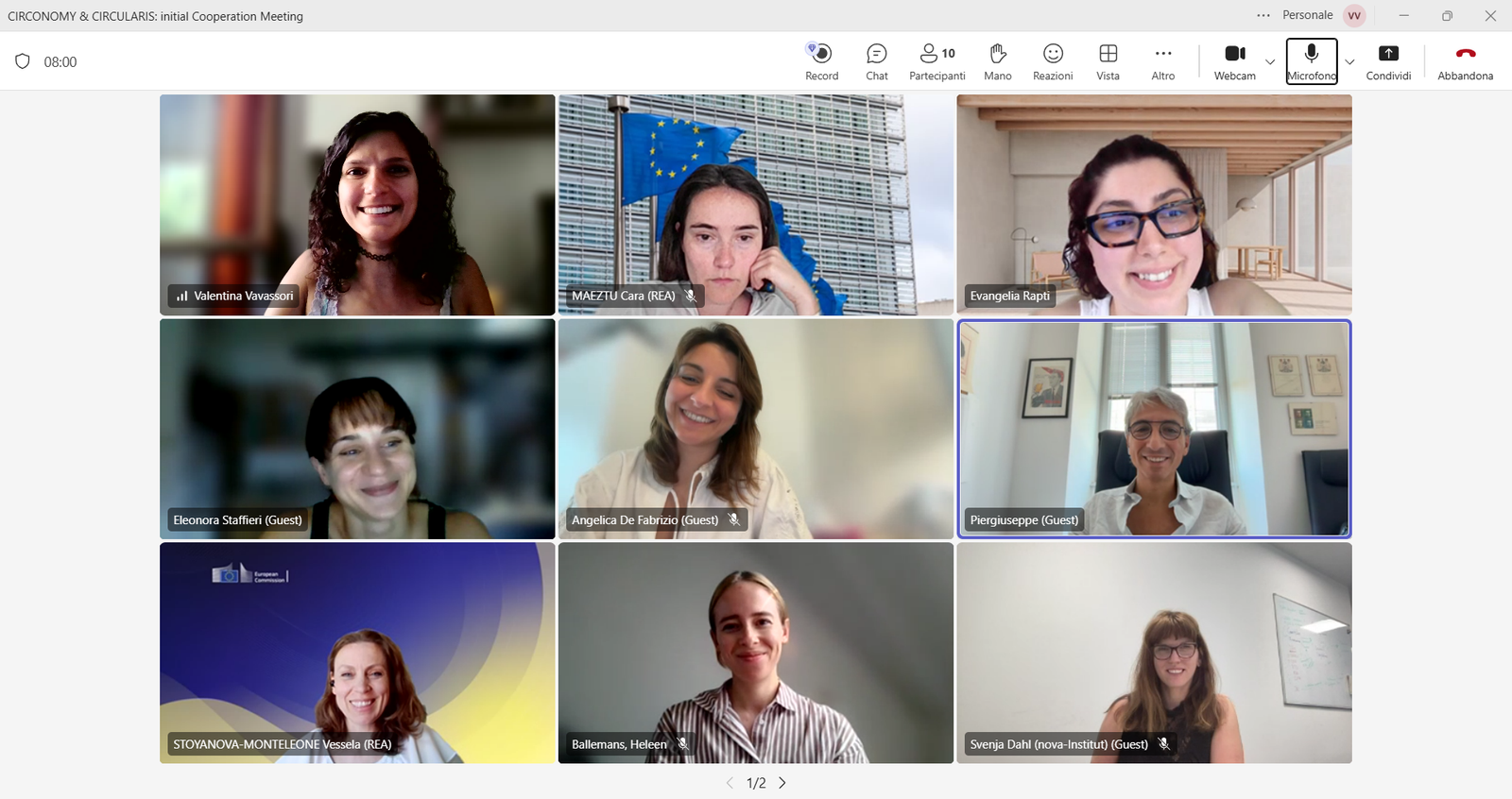
On 9 July 2026, the Horizon Europe projects CIRCONOMY and CIRCULARIS, both funded under the CIRCBIO-06 call, officially launched their collaboration through the Cooperation Launching Event.
The online meeting brought together 13 representatives from the two consortia, including the Project Coordinators, for an initial exchange on their respective objectives, ongoing activities and future plans.
The discussion provided an opportunity to identify common priorities, explore potential synergies and lay the foundations for a structured collaboration throughout the lifetime of the two projects.Several promising areas for cooperation were identified during the meeting, including joint dissemination and communication activities, coordinated stakeholder engagement actions, collaboration with shared European initiatives and sister projects, the exchange of methodologies and best practices, and the joint development of policy recommendations and policy briefs to reinforce the contribution of both projects to Europe's circular economy transition.
The meeting was also attended by the REA Project Officers responsible for the two projects, Vessela Stoyanova-Monteleone and Cara Maeztu, who provided valuable recommendations on how to maximise the impact of the collaboration. In particular, they encouraged both consortia to strengthen their links with the Circular Cities and Regions Initiative (CCRI), work towards joint policy recommendations, explore opportunities for shared final events, and make the best possible use of the European Commission's communication channels to increase the visibility and uptake of project activities and results.The event marked the beginning of a long-term cooperation between CIRCONOMY and CIRCULARIS.
As a next step, the two consortia will reconvene after the summer to further align their work plans, exchange information on upcoming tasks and activities, and jointly develop a Cooperation Action Plan that will guide future collaborative initiatives.
By working together from the very beginning, the two projects aim to create added value beyond their individual objectives, strengthening knowledge exchange, fostering coordinated actions avoiding duplication of efforts and increasing the scientific, policy and societal impact of their results in support of Europe's transition towards a more circular economy.