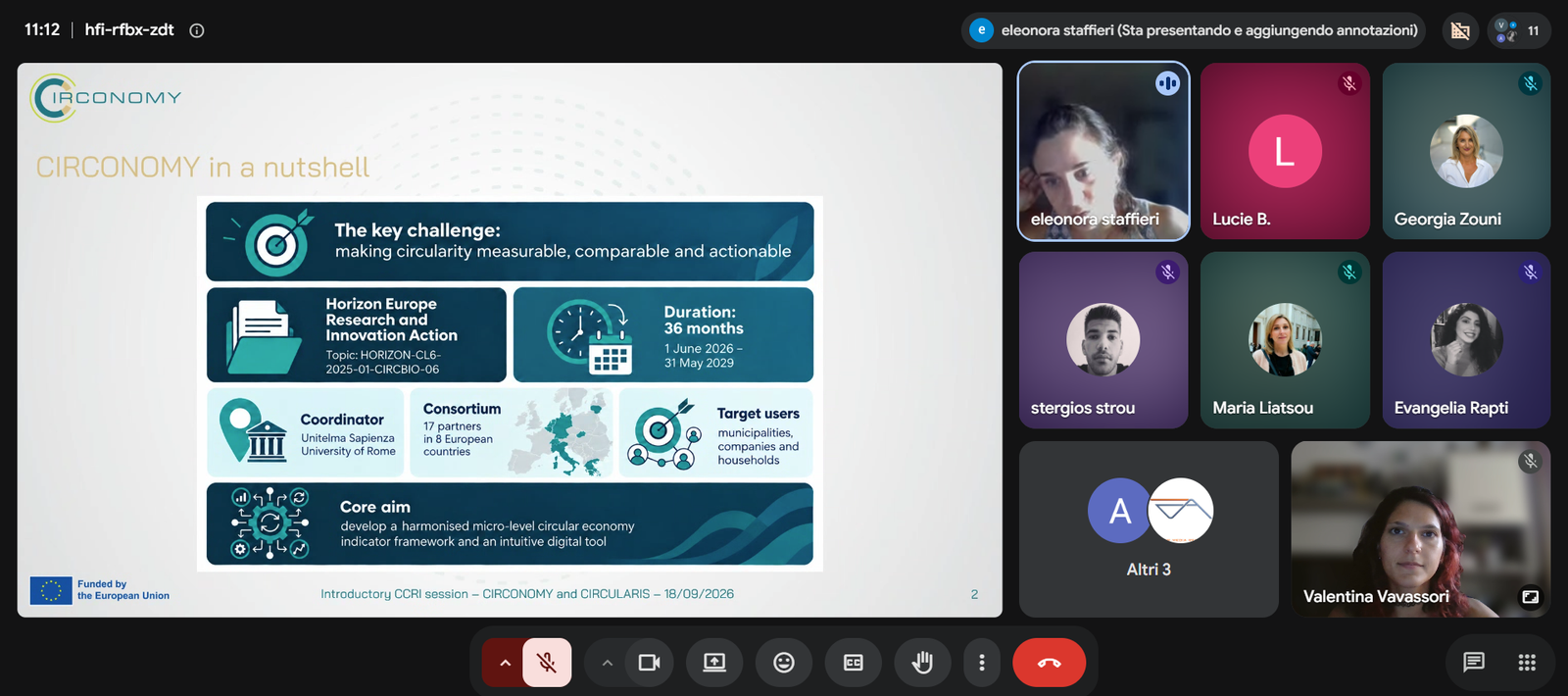
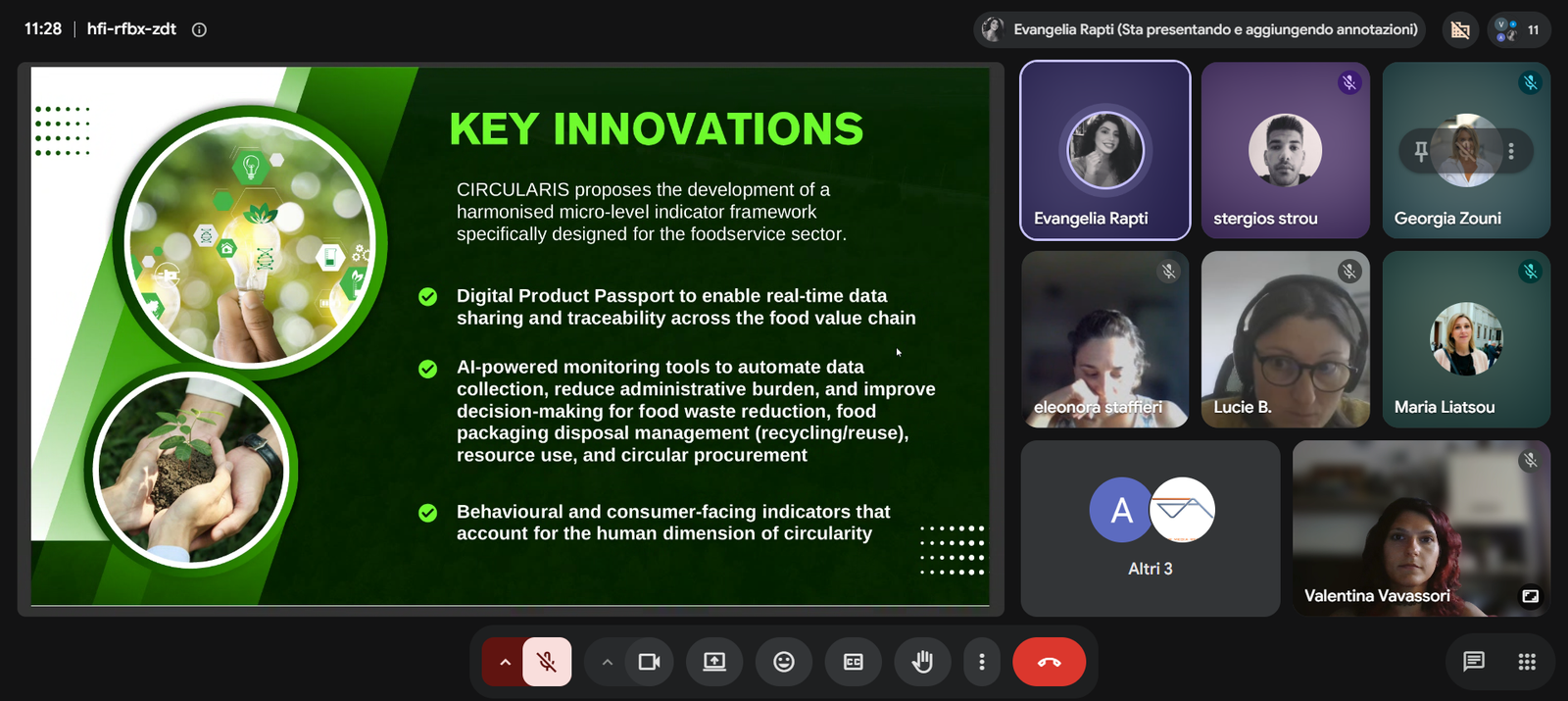
On 18th September 2026, representatives of the CIRCONOMY and CIRCULARIS projects met with the Circular Cities and Regions Initiative (CCRI) to explore synergies and identify opportunities for future collaboration. The meeting brought together ten representatives from the two projects, alongside Lucie Blondel, Policy Officer at the European Commission’s Directorate-General for Research and Innovation (DG RTD), representing the CCRI.
The session opened with a roundtable, giving participants the opportunity to introduce themselves and their roles within the two projects. This was followed by brief presentations from the CIRCONOMY and CIRCULARIS coordinators, who provided an overview of their respective projects, their main objectives and the areas in which cooperation could generate mutual value.
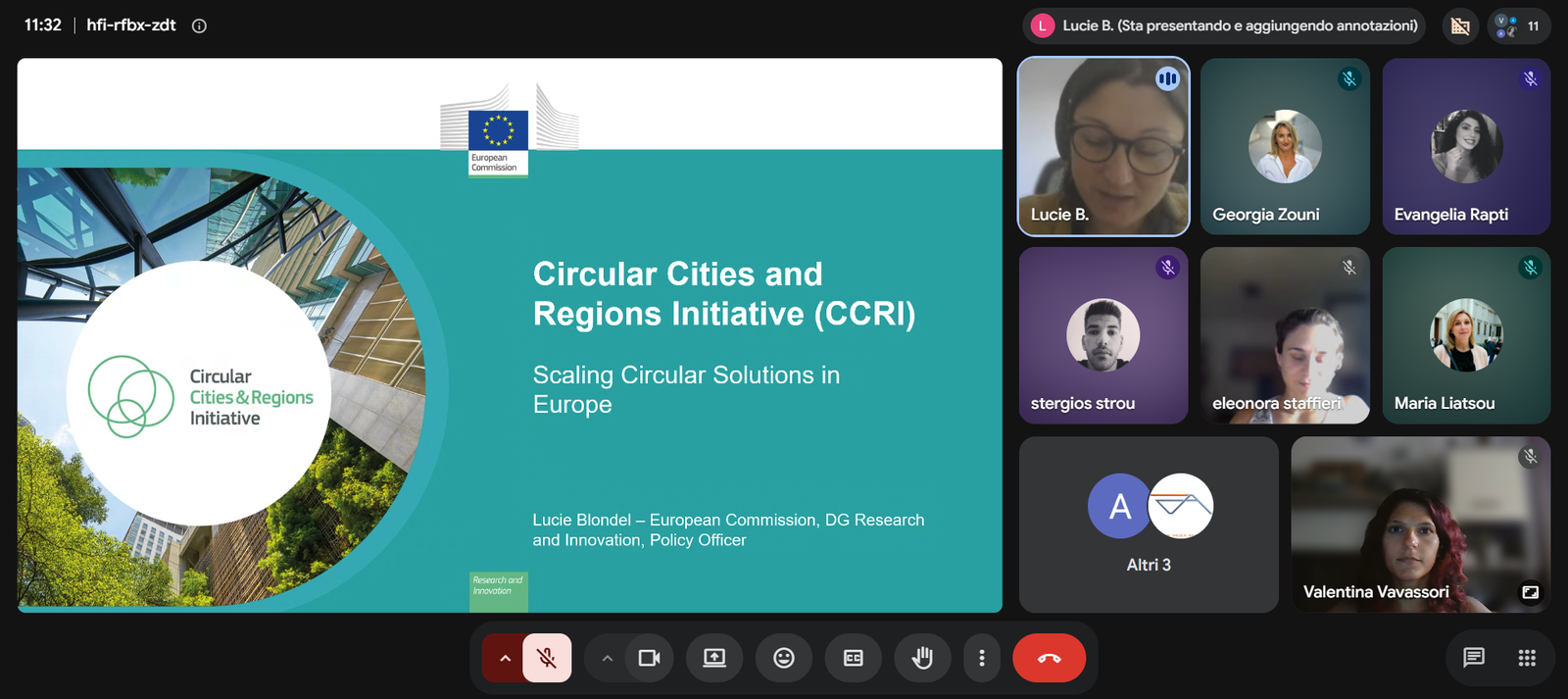
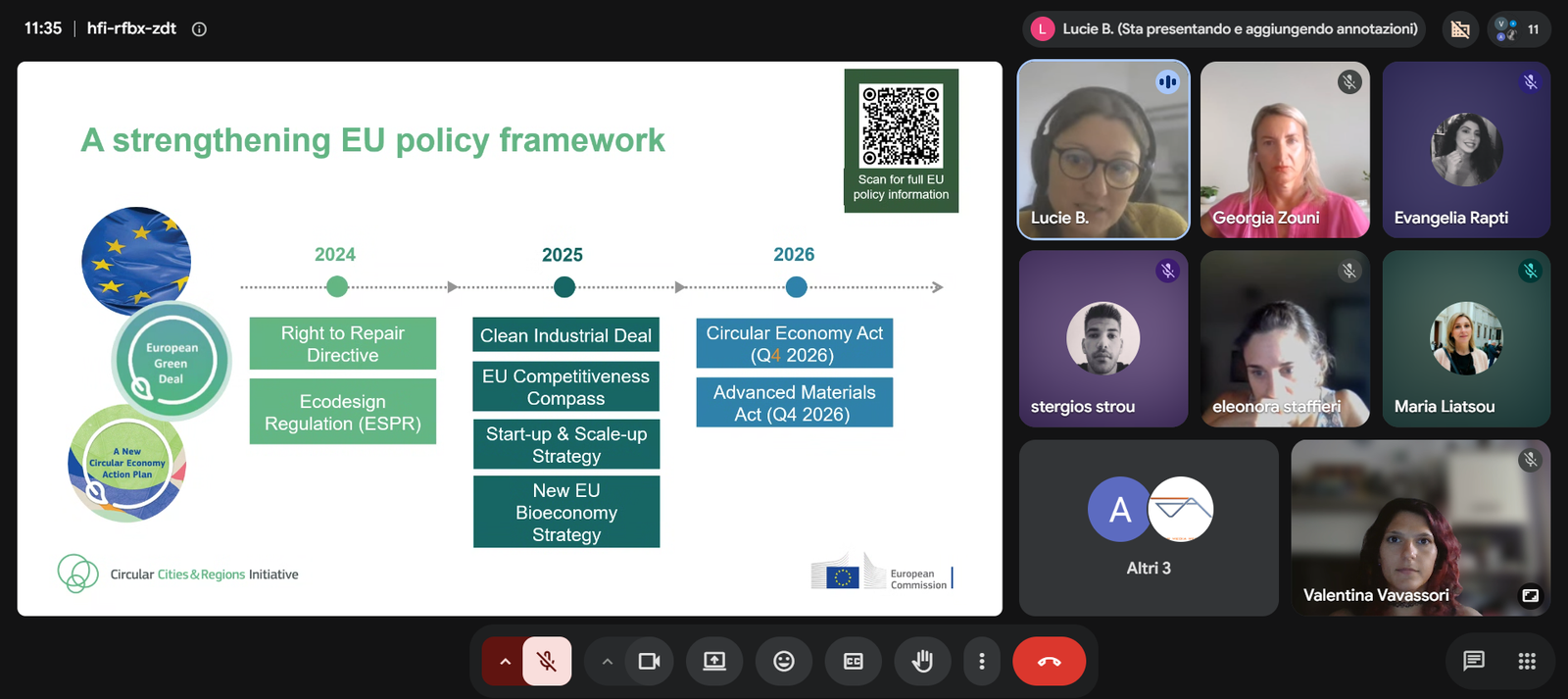
Lucie Blondel then introduced the CCRI, its activities and the opportunities it offers to projects, cities and regions working to accelerate the transition towards a circular economy. The discussion highlighted several potential avenues for collaboration, including:
- Connecting with CCRI cities and regions as real users and co-development partners;
- Engaging with the CCRI Thematic Working Groups and Communities of Practice, particularly the Community of Practice on Monitoring and Indicators for the Circular Economy;
- Exploring opportunities to link the projects’ pilot activities with the new CCRI Peer Learning Programme;
- Contributing to the CCRI Advisory and Support Programme;
- Feeding relevant project results and resources into the CCRI Knowledge Hub;
- Exploring longer-term opportunities for replication and investment through the CCRI’s city–business–investor matchmaking approach;
- Supporting the dissemination and wider visibility of both projects through CCRI channels and networks.
The meeting also provided an opportunity to exchange useful CCRI resources and discuss in greater depth how these projects and initiatives could complement one another. Participants agreed to continue the dialogue and further investigate the most relevant mechanisms for cooperation as the two projects progress.
This first exchange represents an important step towards building stronger connections between CIRCONOMY, CIRCULARIS and the wider CCRI community, helping ensure that project activities and results respond to the needs of European cities and regions and contribute to the practical implementation of the circular economy.